Who Decides, Who Delivers? Reading an Institution's Roles
Read institution roles by separating who authorizes, delivers, and audits a public service, then trace the records that show where a promised change stands.

Who decides, who delivers, and who checks the work when a public service changes? Reading institution roles means separating those responsibilities, because the organization named in a headline may not control every part of the service. A route change, for example, can involve a funder, a decision-maker, an operator, and an auditor.
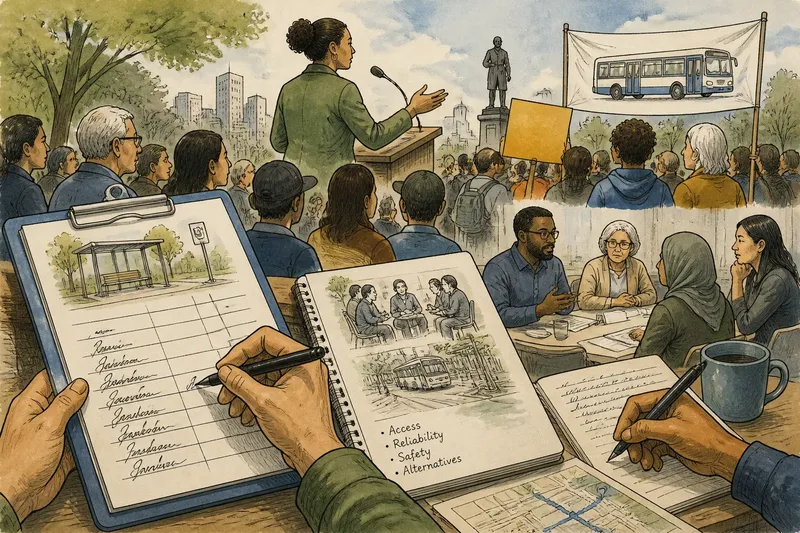
Imagine residents of the fictional town of Alderford report that a bus route no longer connects a housing area with the town’s clinic at useful times. The transport authority appears in a public notice, but that name alone does not tell you whether it approved the route, operates the buses, pays for service, or checks the contractor’s work. The useful question is what each institution actually does.
Follow the action through its assigned roles
In this invented situation, a regional council funds the service and sets broad requirements. A transport authority turns those requirements into a route plan. A private bus company operates the vehicles under contract. A public auditor checks whether the authority and company meet their obligations.
Start with the specific change under dispute: a route map, timetable, contract, budget, or complaint process. Then find the record closest to that action. A timetable notice may show who approved a schedule; a contract can assign operating duties; a budget resolution can identify who authorized spending without showing who chose each stop.
This approach makes the article’s central distinction practical: public responsibility is not a single label. It is a chain of assigned verbs. Look for whether an institution sets, approves, funds, operates, monitors, enforces, or advises. The verb tells you what claim is being made and which record could support or clarify it.
Separate oversight from the power to decide
Oversight checks whether an institution follows rules, meets duties, and explains its conduct. In Alderford, the auditor might review whether the authority followed its route-change process and whether the bus company delivered the service required by its contract. Depending on its formal powers, the auditor could publish findings, request a response, or refer a matter elsewhere.
That review does not automatically make the auditor the route-maker. An oversight body may identify a failure without having power to choose a timetable or direct a bus onto a particular road. Check the body’s formal authority and the consequences attached to its findings.
A decision-maker chooses among available options within applicable rules. The transport authority might approve a revised timetable, while the regional council controls the program’s overall budget. Both decisions affect the route, but they concern different powers.
Ask what the institution can authorize: can it change eligibility, approve a contract, allocate funds, set a standard, or only recommend an action? A public announcement that an organization is “reviewing” a service may describe advice or oversight rather than a binding decision.
Trace implementation to the public-facing result
Implementation puts an authorized decision into effect. If the authority approves a new timetable, the bus company may need to update schedules, assign drivers, and operate vehicles according to the new plan. The authority may also need to revise notices or monitor the contract.
Several organizations can share implementation. One may issue instructions, another may provide staff or equipment, and a third may deliver the service. The change becomes visible at a bus stop, clinic desk, school office, or licensing counter, often far from the office where the decision was signed.
If a policy appears to have been adopted but nothing has changed, check what must happen between approval and delivery. The change may be waiting for funding, detailed rules, a contract amendment, trained staff, or its start date. Or implementation may have begun but remain incomplete. Identify who owns each required action.
Trace Alderford’s complaint from notice to outcome
Residents submit a complaint describing the missed connection and its effect on clinic visits. The transport authority records the concern and reviews its timetable. The bus company supplies service records. The regional council confirms the program’s funding limits. Separately, the auditor examines whether the authority followed the required process.
The authority considers timetable options and approves one that adds a useful connection within the available budget. That is the decision. The bus company updates schedules and assigns service under the revised timetable. Those are implementation tasks. The auditor checks compliance and reports whether the required process was followed. That is oversight.
Say the revised timetable appears on the authority’s website, but a bus at the stop still follows the old schedule. In this invented situation, the notice establishes that a change was announced, not that passengers are receiving it. Check the notice’s start date. If it has not arrived, the old schedule may still apply; if it has passed, ask the authority whether the operator received the new timetable and check the operator’s service records for evidence of delivery.
Suppose the operator says it followed the timetable supplied by the authority, while the authority says the operator failed to meet the contract. Compare the contract, approved timetable, service records, and any oversight findings. Those records can help distinguish a disagreement about the decision from a failure to carry it out.
Use records to identify who owns each verb
Choose records that answer the question at hand rather than collecting every document about an institution. For each item, check the specific information and use the result to decide what to consult next:
- Enabling law or charter: Check whether the body may make the disputed decision. If it has direct authority, examine its decision record; if it is advisory, look for the body that can approve the action.
- Rules or formal delegations: Check who may sign or approve a change. If authority is delegated, consult the named official’s decision; if another sign-off is required, find that approval too.
- Budget records: Check who controls the relevant funding and whether it is restricted. If funds are available for the service, follow the spending authorization; if they are restricted or absent, identify the body that can revise the allocation.
- Contracts or service agreements: Check the operator’s duties and the authority’s monitoring role. If the disputed task is assigned to the operator, compare its records with the contract; if not, look for the document assigning that task elsewhere.
- Meeting minutes or decision notices: Check which body considered the option and what it approved. If the record names a binding decision, follow its implementation; if it records only discussion or advice, find the formal approval.
- Implementation notices and service reports: Check the assigned action, responsible actor, and stated start date. If the date has passed and service records show the change, the action appears to have reached delivery; if not, ask which requirement remains outstanding.
- Audit or inspection findings: Check what the reviewer examined and what it could require. If it identifies a breach and directs a response, look for that response; if it only reports concerns, find the office with power to act on them.
Each record answers a different question. A contract can establish an operator’s duties without explaining why a route was chosen. Minutes can show approval without proving implementation. An audit can document a process failure without selecting a replacement policy.
When a record says “the authority is responsible,” look for the verb attached to that responsibility. If it says the authority approves the timetable, find the approval; if it says the authority monitors the operator, look for monitoring records. If the document names no action, describe the uncertainty rather than inferring control from the institution’s name.
Which role applies when responsibilities overlap?
Can one institution oversee and make decisions?
Yes. An institution can set service rules and check compliance with them. Separate its actions and identify the authority behind each one.
Does the organization named in a notice deliver the service?
Not necessarily. A public agency may set requirements or manage a contract while another organization serves the public. Check the contract and service records to identify who performs the delivery task.
Who is responsible when a decision is not carried out?
Trace the decision to its implementation requirements, then identify who was assigned each task. Check whether an instruction was issued, funding was available, and the operator performed its duty.
What if a record does not name the decision-maker?
Check governing rules, delegated authority, and meeting minutes for the official or body empowered to approve the action. If those records do not resolve it, report the gap rather than attributing the decision to the most visible institution.
Keep the inquiry focused on the disputed action
You do not need to map every agency relationship to understand one service change. Follow the smallest useful chain: the body with authority to decide, the actor assigned to deliver, and the body able to check compliance. A full organizational chart is not worth the effort unless authority remains unclear or formally disputed.
For Alderford, the practical question is whether the transport authority approved the timetable, whether the operator received and followed it, and whether an oversight body can address a failure. This is how to read institution roles without treating a familiar name as proof of control: match each claimed responsibility to its action and record.
When a promised change has not reached the public, the most useful next question is often narrow: which assigned action has not happened yet? That question points toward the responsible office, the record to request, and the distinction between a decision made and a service delivered.